
Thyroid Swelling Treatment Without Surgery
Thyroid Swelling Treatment Without Surgery is an advanced, safe, and highly effective solution for managing thyroid enlargement and nodules without the need for traditional surgery. With the evolution of modern interventional radiology, patients can now benefit from minimally invasive procedures that provide excellent results with minimal discomfort and faster recovery. This innovative approach has become increasingly popular among patients who want to avoid surgical risks and long hospital stays.
Thyroid swelling, commonly known as goiter or thyroid nodules, is a condition that affects a large number of people. It may develop due to hormonal imbalance, iodine deficiency, or abnormal growth of thyroid tissue. Many individuals first notice a visible swelling in the neck or experience symptoms such as difficulty swallowing, throat discomfort, voice changes, or cosmetic concerns. In such situations, Thyroid Swelling Treatment Without Surgery offers a reliable, modern, and patient-friendly alternative.
What is Thyroid Swelling Treatment Without Surgery?
Thyroid Swelling Treatment Without Surgery refers to a group of minimally invasive procedures designed to reduce or eliminate thyroid swelling without making surgical cuts. The most widely used and effective technique is Radiofrequency Ablation (RFA).
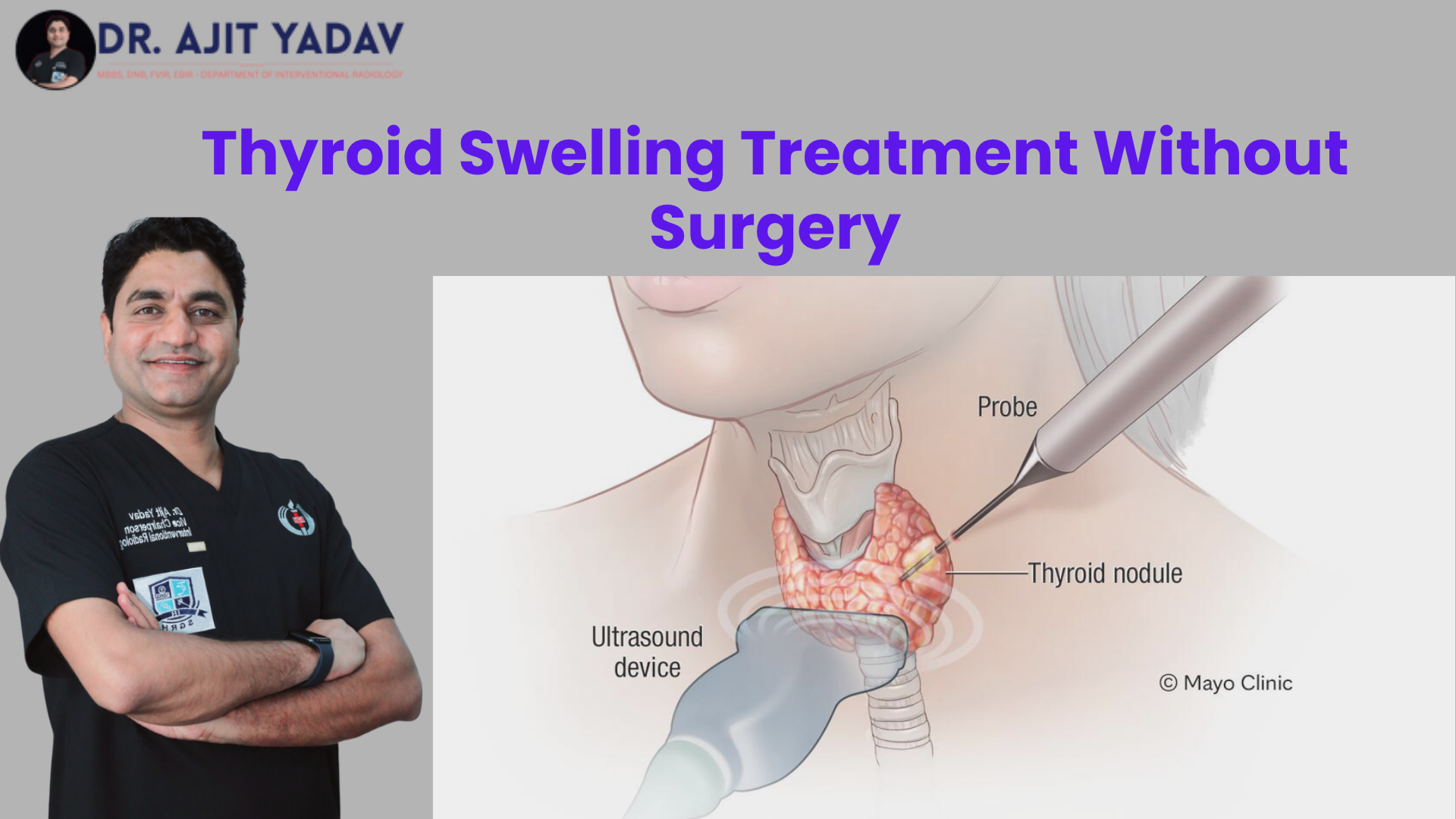
During this procedure, a thin needle-like probe is carefully inserted into the thyroid swelling under real-time ultrasound guidance. The probe emits controlled heat energy that destroys the abnormal thyroid tissue while preserving the surrounding healthy gland. Over time, the treated swelling gradually shrinks, leading to relief from symptoms and improved cosmetic appearance.
Other advanced methods such as laser ablation and ethanol injection may also be used in selected cases, depending on the nature of the thyroid swelling.
Why Patients Prefer Thyroid Swelling Treatment Without Surgery
In recent years, there has been a growing preference for Thyroid Swelling Treatment Without Surgery due to its convenience, safety, and effectiveness. Traditional thyroid surgery, while effective, often involves general anesthesia, hospitalization, and visible scars. In contrast, non-surgical treatments provide similar benefits without these drawbacks.
Patients today are more aware and seek treatments that are less invasive and allow them to return to their daily lives quickly. This is why Thyroid Swelling Treatment Without Surgery is becoming the first choice for many.
Key Benefits
- No surgical incision or stitches
- Outpatient (day-care) procedure
- Minimal pain and discomfort
- Quick recovery within 24–48 hours
- No visible scar on the neck
- Lower risk of complications
- Preservation of normal thyroid function
- Cost-effective compared to surgery
These advantages make Thyroid Swelling Treatment Without Surgery an ideal option for modern patients.
Conditions Treated
Thyroid Swelling Treatment Without Surgery is effective in treating a variety of thyroid-related conditions, including:
- Benign thyroid nodules
- Enlarged thyroid gland (goiter)
- Visible neck swelling
- Nodules causing pressure symptoms
- Cosmetic thyroid lumps
- Recurrent thyroid swelling after surgery
However, proper evaluation through ultrasound imaging and biopsy is necessary to confirm that the swelling is benign and suitable for non-surgical treatment.
Who is the Right Candidate?
You may be an ideal candidate for Thyroid Swelling Treatment Without Surgery if you have:
- Benign thyroid nodules confirmed by FNAC/biopsy
- Gradually increasing thyroid swelling
- Symptoms like discomfort, swallowing difficulty, or pressure
- Cosmetic concerns due to neck lump
- A desire to avoid surgery or anesthesia
A qualified specialist will assess your condition and recommend the most appropriate treatment plan based on your medical history and diagnostic reports.
Procedure and Recovery
The procedure for Thyroid Swelling Treatment Without Surgery is simple, quick, and patient-friendly. It is usually completed within 30 to 60 minutes under local anesthesia. Patients remain awake during the procedure and can communicate with the doctor.
After the treatment, patients are observed for a short period and can go home the same day. Most individuals resume their normal activities within 1 to 2 days. Mild swelling or discomfort may occur temporarily but resolves quickly.
Safety and Effectiveness
Thyroid Swelling Treatment Without Surgery is clinically proven to be safe and effective. It is widely used across the world and recommended by specialists for treating benign thyroid nodules. Studies have shown significant reduction in nodule size over time, along with improvement in symptoms and cosmetic appearance.
Regular follow-ups and ultrasound evaluations help monitor the progress and ensure optimal outcomes.
Why Choose Advanced Non Surgical Treatment?
With advancements in healthcare technology, Thyroid Swelling Treatment Without Surgery has become more precise and reliable. Modern imaging techniques allow doctors to target the affected area accurately, minimizing damage to surrounding tissues.
Patients benefit from:
- Expert care by trained specialists
- Advanced ultrasound-guided procedures
- International standard treatment protocols
- Personalized treatment planning
This makes non-surgical thyroid treatment a trusted and preferred option.
Conclusion
Thyroid Swelling Treatment Without Surgery is transforming thyroid care by offering a safe, scar-free, and highly effective alternative to traditional surgery. It combines advanced technology with patient comfort, ensuring excellent results without the stress of major procedures.
If you are experiencing thyroid swelling or have been diagnosed with thyroid nodules, consulting a specialist for Thyroid Swelling Treatment Without Surgery can help you choose the best possible care. Early diagnosis and timely treatment can significantly improve your quality of life and overall health.
Q1. Is thyroid swelling treatment without surgery painful?
No, the procedure is done under local anesthesia, and patients experience minimal discomfort.
Q2. How long does the procedure take?
It usually takes about 30–60 minutes.
Q3. Will the swelling go away completely?
The swelling reduces gradually over time, and symptoms improve significantly.
Q4. Can surgery be avoided?
Yes, in many cases, this treatment helps avoid traditional surgery.