
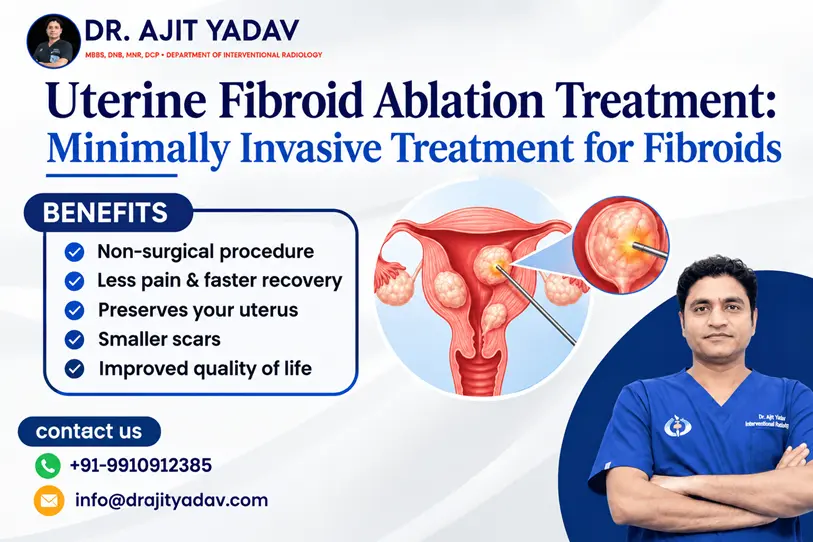
Uterine fibroids are common, non-cancerous growths that develop in or around the uterus. While some fibroids cause no symptoms, others can lead to heavy menstrual bleeding, pelvic pressure, abdominal discomfort, frequent urination, or fertility-related concerns. Treatment depends on the size, number, location of fibroids, symptoms, age, reproductive plans, and overall health.
Uterine Fibroid Ablation Treatment is one minimally invasive approach that may be considered for selected patients. Unlike major open surgery, ablation techniques aim to treat fibroid tissue through a targeted procedure while preserving the uterus. Another important option is Fibroid Treatment Without Surgery, including image-guided minimally invasive procedures such as uterine fibroid embolization.
What Is Uterine Fibroid Ablation?
Uterine Fibroid Ablation Treatment refers to minimally invasive techniques that use controlled energy to destroy or shrink targeted fibroid tissue. Depending on the specific technique, energy such as radiofrequency energy may be delivered directly to the fibroid under imaging guidance.
The objective is to reduce the viable fibroid tissue and, over time, decrease its size and associated symptoms.
Ablation is not appropriate for every fibroid or every patient. A specialist evaluates the fibroid’s characteristics and the patient’s treatment goals before recommending the procedure.
Symptoms of Uterine Fibroids
Fibroids can produce different symptoms depending on their size and location. Common symptoms include:
- Heavy or prolonged menstrual bleeding
- Pelvic pain or pressure
- Lower abdominal discomfort
- Abdominal enlargement or bloating
- Frequent urination
- Constipation or pressure on the bowel
- Pain during sexual intercourse
- Lower back discomfort
- Fatigue related to heavy menstrual blood loss
- Difficulty conceiving in some cases
Some women have fibroids without experiencing any noticeable symptoms.
Causes and Risk Factors
The exact cause of fibroids is not completely understood. Hormonal and genetic factors are believed to influence their development and growth.
Factors associated with a higher likelihood of developing fibroids can include:
- Family history of fibroids
- Reproductive age
- Hormonal influences
- Certain genetic factors
- Other individual biological factors
Having a risk factor does not necessarily mean that a person will develop symptomatic fibroids.
Diagnosis of Uterine Fibroids
Before considering Uterine Fibroid Ablation Treatment, an appropriate diagnostic evaluation is important. The doctor may review symptoms, menstrual history, medical history, and previous treatments.
Imaging Tests
Ultrasound is commonly used to identify fibroids and assess their size and location. Depending on the clinical situation, MRI may provide more detailed information about the uterus and individual fibroids.
Imaging can help determine:
- Number of fibroids
- Size of each fibroid
- Location within the uterus
- Relationship to the uterine cavity
- Overall uterine anatomy
The findings help the specialist determine whether Fibroid Treatment Without Surgery may be appropriate.
Treatment Planning
Treatment is individualized. Small fibroids that are not causing symptoms may only require observation. Symptomatic fibroids may require medication, minimally invasive treatment, or surgery depending on the patient’s circumstances.
For patients considering uterine-sparing treatment, an Interventional Radiologist can discuss procedures such as fibroid ablation or uterine fibroid embolization.
Uterine Fibroid Ablation Treatment: Procedure and Benefits
During Uterine Fibroid Ablation Treatment, the fibroid is targeted using a specialized minimally invasive technique. The exact approach varies according to the ablation technology and clinical setting.
Imaging guidance is used to help the specialist accurately identify and treat the targeted fibroid while minimizing injury to surrounding structures.
How the Procedure Works
In general, the treatment involves:
- Evaluation and imaging before treatment.
- Planning the safest approach based on fibroid size and location.
- Administration of appropriate anesthesia or sedation.
- Placement of the treatment device using the selected minimally invasive approach.
- Delivery of controlled energy to the fibroid.
- Monitoring during the procedure.
- Removal of the device and observation after treatment.
The treated fibroid may gradually shrink over time rather than disappearing immediately.
Benefits of Minimally Invasive Fibroid Treatment
Potential benefits may include:
- Smaller incisions or minimally invasive access
- Reduced disruption to surrounding tissues
- Shorter recovery compared with some major surgical procedures
- Reduced hospital stay in appropriate cases
- Symptom improvement as the treated fibroid shrinks
- Uterus-preserving treatment in selected patients
The expected benefits vary from patient to patient. A consultation is necessary to determine whether this approach is suitable.
Fibroid Ablation vs Uterine Fibroid Embolization
Both are minimally invasive treatment approaches, but they work differently.
Fibroid ablation uses energy to directly treat fibroid tissue. Uterine Fibroid Embolization (UFE) works by blocking the blood supply to fibroids through small particles delivered into the uterine arteries.
The choice depends on factors such as fibroid characteristics, symptoms, previous treatments, medical history, and reproductive goals.
For suitable patients, both can be alternatives to major surgery. However, Fibroid Treatment Without Surgery does not mean that surgery is never necessary. Some patients may still require surgical treatment based on their individual condition.
Recovery After Treatment
Recovery varies depending on the treatment method, number and size of fibroids, and individual health.
Patients may experience temporary pelvic cramping, discomfort, tiredness, or mild symptoms during the early recovery period. The treating specialist provides specific instructions regarding medication, physical activity, work, and follow-up.
Follow-up imaging may be recommended to evaluate the response to treatment.
Why Choose Dr. Ajit Yadav for Fibroid Treatment?
Dr. Ajit Yadav, Interventional Radiologist, provides minimally invasive image-guided treatment options for appropriate patients with uterine fibroids.
His services may include evaluation and treatment planning for:
- Uterine fibroid ablation
- Uterine fibroid embolization (UFE)
- Image-guided minimally invasive procedures
- Vascular and interventional radiology procedures
- Personalized treatment planning based on imaging and clinical needs
The most appropriate procedure is selected after evaluating the patient’s symptoms, imaging findings, medical history, and treatment objectives.
Frequently Asked Questions
1. What is Uterine Fibroid Ablation Treatment?
It is a minimally invasive procedure that uses controlled energy to treat selected uterine fibroids. The treated fibroid tissue can gradually shrink after the procedure.
2. Is fibroid ablation a major surgery?
No. Fibroid ablation is generally considered a minimally invasive treatment rather than major open surgery. The exact technique and recovery depend on the procedure used.
3. Can fibroids be treated without surgery?
Yes. Selected patients may be candidates for minimally invasive treatments such as fibroid ablation or UFE. Suitability depends on fibroid characteristics and individual health factors.
4. What is Uterine Fibroid Embolization?
UFE is a minimally invasive procedure in which the blood supply to the fibroid is reduced by delivering small embolic particles into the uterine arteries. This can cause the fibroid to shrink over time.
5. How are fibroids diagnosed?
Ultrasound is commonly used for diagnosis. MRI may be recommended when more detailed information about fibroid size, number, location, or uterine anatomy is required.
6. Will fibroids disappear immediately after ablation?
Usually, no. Ablation treats the fibroid tissue, and the fibroid generally shrinks gradually rather than disappearing immediately.
7. How long does recovery take?
Recovery varies according to the procedure and the individual. Your Interventional Radiologist will provide personalized guidance about returning to normal activities.
8. Is fibroid ablation suitable for everyone?
No. The treatment is suitable only for selected patients. Fibroid size, number, location, symptoms, medical history, and reproductive goals all need to be considered.
9. Is UFE different from fibroid ablation?
Yes. Ablation directly treats fibroid tissue with energy, while UFE reduces the fibroid’s blood supply through embolization. Both are minimally invasive but use different treatment mechanisms.
Conclusion
Uterine Fibroid Ablation Treatment can provide a minimally invasive option for selected women experiencing symptomatic uterine fibroids. Careful imaging and specialist assessment are essential before choosing treatment.
For patients looking for Fibroid Treatment Without Surgery, options such as fibroid ablation and uterine fibroid embolization may be considered depending on their individual condition. The right treatment should always be selected after a detailed evaluation.
Book an Appointment with Dr. Ajit Yadav
If uterine fibroids are affecting your quality of life, consult Dr. Ajit Yadav, Interventional Radiologist, for an evaluation and discussion of suitable minimally invasive treatment options.
Book an appointment today to understand whether uterine fibroid ablation or uterine fibroid embolization may be appropriate for you.

Comments are closed