
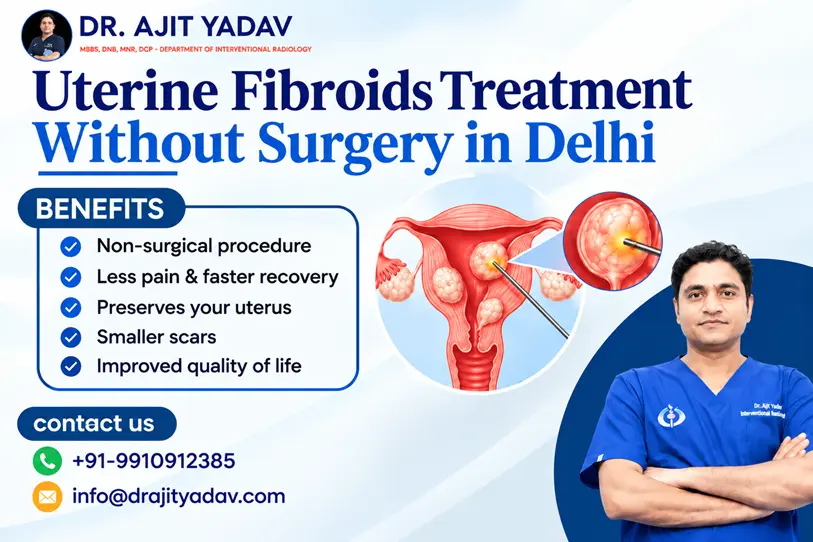
Uterine fibroids are common, non-cancerous growths that develop in or around the muscular wall of the uterus. Some fibroids cause no symptoms, while others can lead to heavy menstrual bleeding, prolonged periods, pelvic pressure, abdominal discomfort, frequent urination, or other symptoms that affect everyday life.
For women who want to avoid major surgery, Uterine Fibroids Treatment Without Surgery in Delhi may include minimally invasive procedures such as Uterine Fibroid Embolization (UFE). UFE is performed by an interventional radiologist through a catheter and works by reducing the blood supply to the fibroids, allowing them to shrink over time.
However, not every fibroid requires treatment, and not every patient is suitable for embolization. Treatment selection depends on symptoms, fibroid size and location, imaging findings, age, overall health, and pregnancy plans.
Symptoms and Causes of Uterine Fibroids
Common Symptoms
Many women with fibroids have no symptoms. When symptoms occur, they may include:
- Heavy or prolonged menstrual bleeding
- Pelvic pain or pressure
- Lower abdominal discomfort
- Abdominal fullness or bloating
- Frequent urination
- Difficulty emptying the bladder
- Constipation or pressure on the bowel
- Pain during intercourse
- Tiredness associated with heavy menstrual blood loss
- Lower back or leg discomfort in some cases
The location, number, and size of fibroids can influence the type and severity of symptoms.
What Causes Uterine Fibroids?
The exact cause of fibroids is not completely understood. They develop from the muscular tissue of the uterus and can vary considerably in size and location.
Fibroids may be influenced by hormonal and genetic factors. They are particularly common during the reproductive years and may change in size over time.
Risk factors can include:
- Family history of fibroids
- Reproductive age
- Hormonal influences
- Increasing age before menopause
- Certain lifestyle and metabolic factors
Having fibroids does not automatically mean that treatment is necessary. A doctor evaluates symptoms and imaging findings before recommending an intervention.
For women exploring Uterine Fibroids Treatment Without Surgery in Delhi, identifying the exact location and characteristics of the fibroids is an important first step.
Diagnosis and Uterine Fibroid Embolization
How Are Fibroids Diagnosed?
Diagnosis generally begins with a medical history and pelvic examination, followed by imaging when appropriate.
Ultrasound is commonly used to identify fibroids and assess their size and location. Depending on the situation, MRI may provide additional information about the number, position, vascularity, and characteristics of the fibroids, particularly when treatment planning is being considered.
Your doctor may also recommend blood tests when heavy menstrual bleeding raises concern about anemia.
A detailed evaluation helps determine whether medication, observation, Minimally Invasive Fibroid Treatment, UFE, myomectomy, or another treatment approach is appropriate.
What Is Uterine Fibroid Embolization?
Uterine Fibroid Embolization (UFE), also called uterine artery embolization, is a minimally invasive procedure used to treat symptomatic fibroids.
During UFE, an interventional radiologist introduces a thin catheter into an artery, commonly through a small access point in the wrist or groin. Using X-ray guidance, the catheter is directed toward the arteries supplying the uterus. Tiny embolic particles are then delivered to reduce blood flow to the fibroids. As their blood supply decreases, the fibroids gradually shrink.
Unlike hysterectomy, UFE does not involve removal of the uterus. Unlike traditional surgical fibroid removal, it does not require a large abdominal incision.
Who May Be Considered for UFE?
UFE may be considered for women with symptomatic fibroids who want to avoid major surgery, depending on their individual circumstances.
However, pregnancy, active pelvic infection, suspected malignancy, certain fibroid characteristics, and other medical factors can affect eligibility. Women who are planning pregnancy should have a detailed discussion with their gynecologist and interventional radiologist because the effects of UFE on fertility and pregnancy remain an important consideration.
Therefore, Uterine Fibroids Treatment Without Surgery in Delhi should always be planned after appropriate imaging and specialist consultation.
Benefits, Recovery and Comparison With Surgery
Benefits of Minimally Invasive Fibroid Treatment
Minimally Invasive Fibroid Treatment can offer an alternative to conventional open surgery for appropriately selected patients.
Potential advantages of UFE include:
- No large abdominal surgical incision
- Small catheter access point
- Uterus is not removed
- Usually less blood loss than major surgery
- Shorter recovery compared with many surgical approaches
- Treatment of multiple fibroids during the same procedure
- Gradual reduction in fibroid size and related symptoms
RadiologyInfo reports that UFE is substantially less invasive than open or laparoscopic surgery and that many patients experience significant improvement in fibroid-related symptoms following treatment.
NICE also states that uterine artery embolization can be offered as a treatment option for suitable women after appropriate counselling and monitoring.
Recovery After Uterine Fibroid Embolization
Recovery varies from patient to patient. Pelvic cramping is common after UFE and may be most noticeable during the first day. Nausea, tiredness, and a low-grade fever can also occur temporarily. Medicines can be prescribed to manage these symptoms.
Many patients return to their normal activities within approximately one to two weeks, although the exact recovery period depends on the individual and the procedure.
Patients should follow their doctor’s instructions regarding:
- Physical activity
- Pain medicines
- Wound or catheter-site care
- Exercise
- Sexual activity
- Follow-up appointments
- Follow-up imaging
Symptom improvement may occur progressively rather than immediately. Fibroids generally continue to shrink over several months after embolization.
UFE vs Surgical Fibroid Treatment
| Feature | Uterine Fibroid Embolization | Myomectomy/Hysterectomy |
| Large surgical incision | Usually not required | May be required depending on approach |
| Uterus removed | No | Hysterectomy: Yes |
| Catheter-based | Yes | No |
| Recovery | Generally shorter | Depends on surgical procedure |
| Multiple fibroids | Can treat multiple fibroids | Depends on surgical approach |
| Fertility considerations | Requires individual counselling | Depends on procedure |
| Specialist involved | Interventional radiologist | Gynecologic surgeon |
The comparison does not mean one treatment is suitable for every woman. Myomectomy, hysterectomy, medication, UFE, or other options may each have an appropriate role depending on the patient’s symptoms, fibroid characteristics, age, and reproductive plans.
FAQs About Uterine Fibroids Treatment Without Surgery in Delhi
1. Can uterine fibroids be treated without surgery?
Yes. Selected symptomatic fibroids can be treated using minimally invasive procedures such as UFE. The appropriate treatment depends on the patient’s individual medical and imaging findings.
2. What is Uterine Fibroid Embolization?
Uterine Fibroid Embolization is a catheter-based procedure that reduces blood flow to fibroids using small embolic particles. Reduced blood supply causes the treated fibroids to shrink over time.
3. Is UFE the same as fibroid surgery?
No. UFE is a minimally invasive, image-guided procedure and does not involve surgically removing the fibroid or uterus.
4. How long does it take for fibroids to shrink after UFE?
Fibroids shrink progressively following treatment. RadiologyInfo notes that fibroids typically continue shrinking and softening over several months after UFE.
5. Is UFE suitable for women who want to become pregnant?
Fertility and pregnancy after UFE require individualized counselling. NICE specifically recommends informing patients that the effects of uterine artery embolization on fertility and pregnancy are uncertain.
6. Will heavy menstrual bleeding improve after UFE?
UFE is used to manage symptoms caused by fibroids, including heavy menstrual bleeding. Improvement varies among patients and develops over time.
7. Is UFE painful?
Pelvic cramping is common after UFE, particularly during the first 24 hours. Doctors can provide medicines to control pain and other temporary symptoms.
8. Can multiple fibroids be treated with UFE?
UFE can treat multiple fibroids by targeting their blood supply rather than treating each fibroid individually. Whether it is appropriate depends on the patient’s imaging and clinical circumstances.
9. How do I know whether I need fibroid treatment?
Treatment is generally considered when fibroids cause significant symptoms or complications. Ultrasound and, when appropriate, MRI can help determine the size, number, location, and characteristics of the fibroids and assist with treatment planning.
10. Who performs Uterine Fibroid Embolization?
UFE is performed by an interventional radiologist, often working as part of a multidisciplinary team that may include a gynecologist. NICE specifically identifies the involvement of an interventional radiologist and gynecologist in the care pathway.
Conclusion
Uterine Fibroids Treatment Without Surgery in Delhi can provide an important minimally invasive option for women experiencing symptoms from uterine fibroids. Uterine Fibroid Embolization works by reducing the blood supply to fibroids, allowing them to shrink while avoiding the large incision associated with conventional surgery.
However, UFE is not automatically appropriate for every patient. Proper diagnosis, ultrasound or MRI assessment, evaluation of symptoms, and discussion of reproductive goals are essential before choosing treatment.
Consult Dr. Ajit Yadav | Interventional Radiologist
If you are experiencing heavy menstrual bleeding, pelvic pressure, abdominal discomfort, or other symptoms associated with uterine fibroids, consider a specialist evaluation with Dr. Ajit Yadav | Interventional Radiologist.
Dr. Ajit Yadav provides image-guided, minimally invasive interventional radiology services, including Uterine Fibroid Embolization and other vascular and interventional procedures. A personalized evaluation can help determine whether Minimally Invasive Fibroid Treatment is appropriate for your condition.
If you are searching for Uterine Fibroids Treatment Without Surgery in Delhi, book an appointment with Dr. Ajit Yadav to discuss your symptoms, imaging findings, treatment options, and expected recovery.
