
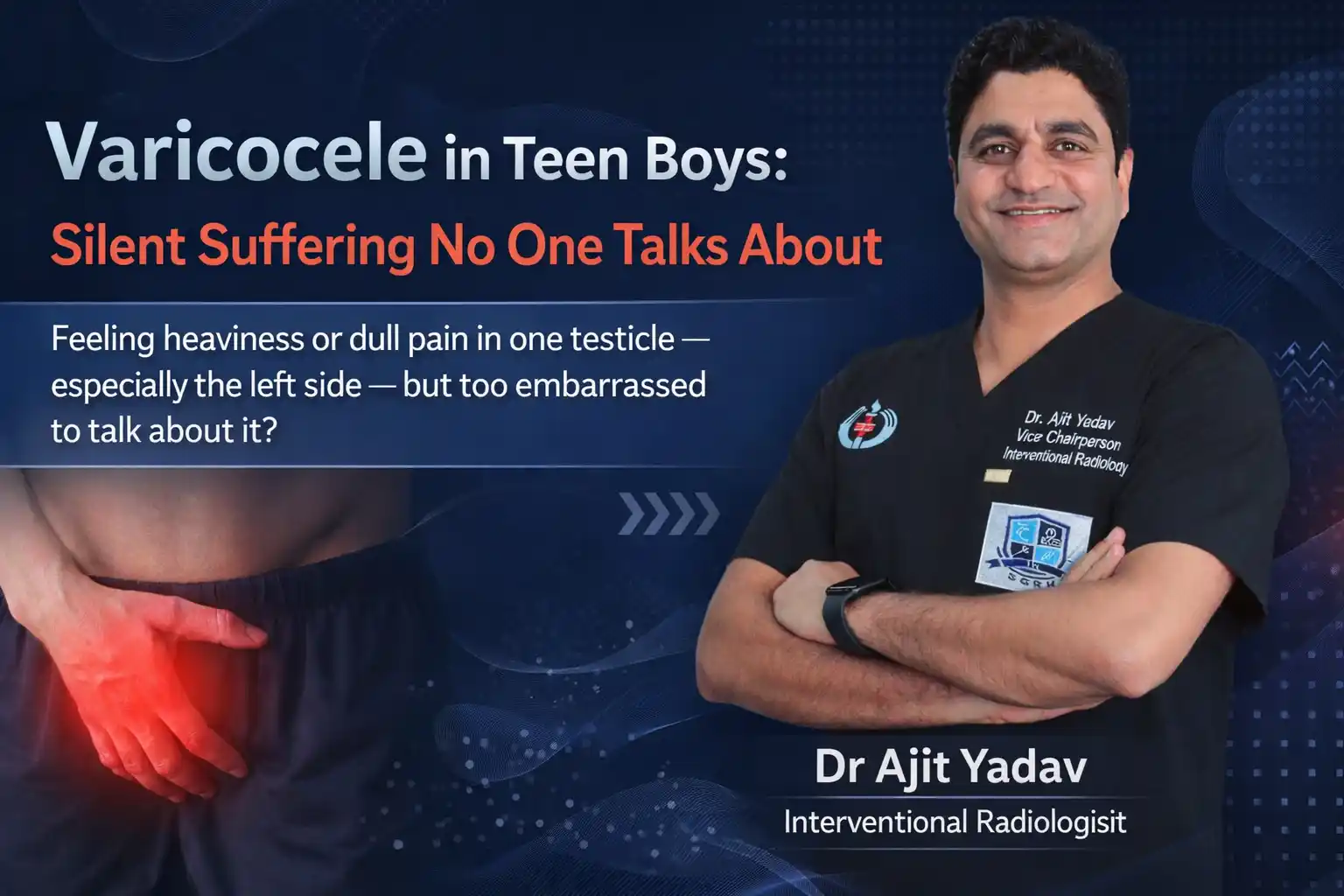
Learn about varicocele in teen boys—its symptoms, causes, risks, and treatment options. Expert guide for parents in Delhi to identify early warning signs and seek timely care.
Varicocele is a condition that quietly affects many teenage boys, yet it remains widely misunderstood and often ignored. Because the symptoms are subtle or painless, teenagers may hesitate to talk about them, leading to delayed diagnosis and long-term complications. Early awareness can make a life-changing difference in protecting future reproductive health and overall well-being.
Table of Contents
ToggleWhat is Varicocele?
Varicocele is the enlargement of veins within the scrotum, similar to varicose veins in the legs. It occurs when blood flow through the veins becomes sluggish, causing them to swell. This condition most commonly develops during puberty when the body undergoes rapid growth and hormonal changes.
Studies show that varicocele affects nearly 15% of adolescent boys, making it one of the most common causes of testicular discomfort and potential fertility concerns later in life.
Why Varicocele Often Goes Unnoticed in Teen Boys
Varicocele in teen boys teenagers may not recognize symptoms or may feel embarrassed discussing testicular discomfort. Since varicocele often develops slowly and may not cause severe pain initially, it can remain undetected for years.
Common reasons it goes unnoticed include:
- Mild or no pain in early stages
- Lack of routine testicular health awareness
- Hesitation or embarrassment to report symptoms
- Misinterpreting heaviness as muscle strain
Key Symptoms Parents and Teens Should Watch For
Recognizing early warning signs is crucial. Although some boys may remain asymptomatic, others may experience:
Common Signs
- Dull ache or heaviness in the scrotum
- Visible enlarged or twisted veins
- Discomfort after standing for long periods
- Swelling on one side (usually the left)
- Difference in testicle size
These symptoms may worsen during physical activity or prolonged standing and improve when lying down.
Causes and Risk Factors
varicocele in teen boys develops due to faulty valves in the testicular veins, leading to blood pooling. The exact cause is not always clear, but several factors increase the risk:
- Rapid growth during puberty
- Family history of varicocele
- Increased pressure in abdominal veins
- Left-sided vein anatomy (more prone to varicocele)
Why Early Diagnosis Matters
Ignoring varicocele in teen boys can have long-term consequences. If left untreated, it may affect testicular growth and future fertility. Early detection allows doctors to monitor progression and recommend appropriate treatment only when necessary.
Potential Complications
- Reduced testicular growth
- Chronic scrotal discomfort
- Decreased sperm quality in adulthood
- Hormonal imbalance in severe cases
Diagnosis: When to Consult a Specialist
Medical evaluation typically involves a physical examination and, if needed, a scrotal ultrasound. These painless tests help determine the severity and guide treatment decisions.
Awareness & Care for Teen Boys in Delhi
With increasing awareness about adolescent health, timely screening and consultation with qualified specialists can help ensure accurate diagnosis and long-term reproductive health protection.
Treatment Options for Varicocele in Teenagers
Treatment depends on the severity of symptoms and testicular development.
1. Observation & Monitoring
For mild cases with no pain or growth issues, doctors may recommend periodic check-ups.
2. Pain Management & Lifestyle Guidance
- Avoid prolonged standing
- Wear supportive undergarments
- Maintain healthy weight and physical activity balance
3. Surgical Treatment (Varicocelectomy)
In moderate to severe cases, minimally invasive surgery may be advised to improve blood flow and prevent complications. Modern techniques offer faster recovery and excellent success rates for varicocele in teen boys.
Varicocele in teen boys is a silent yet significant condition that deserves more attention. Awareness, early recognition, and timely medical guidance can protect long-term reproductive health and ensure a confident, healthy transition into adulthood. Open conversations today can prevent complications tomorrow.
For More Details:
Name: Dr Ajit K Yadav : Thyroid Ablation, Varicocele Treatment, Uterine Artery Embolization & Interventional Radiologist in Delhi.
Address: Department Of Interventional Radiology, Sir Ganga Ram Hospital, Delhi, 110060
Phone: +91 – 99109 12385
Our Location: https://share.google/HPINJA4pLTIkqqNgt
[varicocele treatment in Delhi, pediatric urologist Delhi, teen testicular pain Delhi, scrotal swelling treatment Delhi, adolescent male health Delhi, fertility health for boys Delhi, varicocele surgery Delhi, teen urology clinic Delhi, male reproductive health Delhi, early varicocele diagnosis Delhi]

Comments are closed