
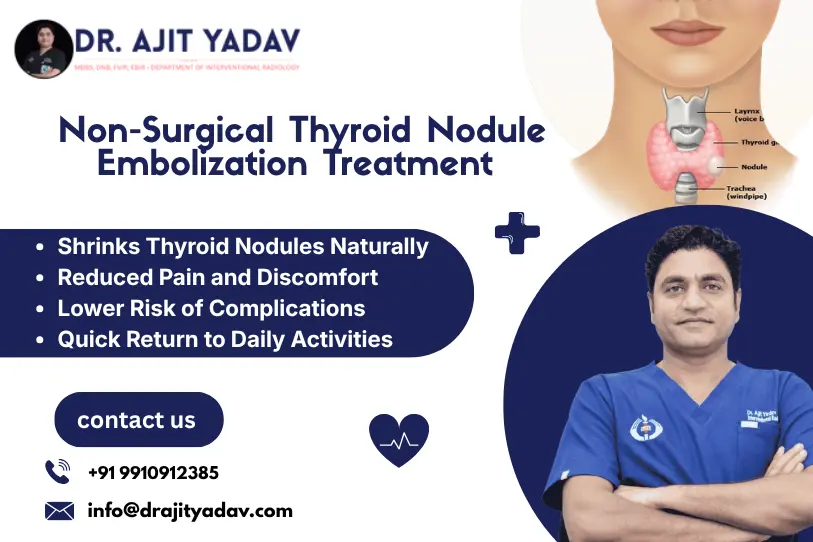
Thyroid nodules are common thyroid gland abnormalities that affect millions of people worldwide. While many thyroid nodules are harmless and do not require immediate treatment, some may grow over time and cause symptoms such as neck discomfort, difficulty swallowing, breathing problems, or visible swelling. Traditionally, surgery was considered the primary treatment option for large or symptomatic thyroid nodules. However, advancements in interventional radiology have introduced safer and minimally invasive alternatives.
Non-Surgical Thyroid Nodule Embolization Treatment is an innovative procedure that reduces the size of thyroid nodules without removing the thyroid gland through surgery. This advanced technique works by reducing the blood supply to the nodule, causing it to shrink gradually while preserving normal thyroid function.
For patients looking for Thyroid Nodule Embolization Treatment and Non-Surgical Thyroid Nodule Treatment in Delhi, this procedure offers a modern solution with minimal discomfort, shorter recovery time, and fewer complications compared to traditional surgery.
Dr. Ajit Yadav is a highly experienced Interventional Radiologist specializing in minimally invasive treatments for thyroid nodules, vascular conditions, tumors, and other complex medical conditions. With advanced expertise in image-guided procedures, he provides personalized treatment plans based on each patient’s condition.
Understanding Thyroid Nodules
A thyroid nodule is a small lump or abnormal growth that develops within the thyroid gland, which is located at the front of the neck. These nodules can be solid, fluid-filled, or a combination of both.
Most thyroid nodules are benign (non-cancerous), but proper evaluation is essential to rule out serious conditions. Some nodules remain stable for years, while others may increase in size and create pressure symptoms.
Common types of thyroid nodules include:
- Benign thyroid nodules
- Colloid nodules
- Cystic thyroid nodules
- Hyperfunctioning thyroid nodules
- Thyroid adenomas
- Suspicious thyroid nodules requiring further evaluation
The treatment approach depends on the size, symptoms, growth pattern, and diagnostic findings of the nodule.
Symptoms of Thyroid Nodules
Many thyroid nodules do not cause noticeable symptoms, especially when they are small. However, larger nodules may create visible changes or discomfort.
Common symptoms include:
Visible Neck Swelling
A noticeable lump or swelling in the front area of the neck is one of the most common signs of a thyroid nodule.
Difficulty Swallowing
Large nodules may press against the food pipe (esophagus), causing discomfort while swallowing food or liquids.
Breathing Difficulty
Some enlarged thyroid nodules can put pressure on the windpipe (trachea), leading to breathing problems.
Voice Changes
Pressure on nearby nerves may cause hoarseness or changes in voice.
Neck Discomfort
Patients may experience tightness, pressure, or discomfort around the thyroid region.
Hormonal Symptoms
Some thyroid nodules can affect hormone production and may cause symptoms such as:
- Increased heartbeat
- Weight changes
- Fatigue
- Anxiety
- Excessive sweating
Early diagnosis helps determine whether monitoring or treatment is required.
Causes and Risk Factors of Thyroid Nodules
Several factors can contribute to the development of thyroid nodules. Understanding these causes helps in early detection and management.
Iodine Deficiency
Insufficient iodine intake can affect thyroid function and increase the risk of thyroid enlargement and nodules.
Thyroid Tissue Overgrowth
Sometimes, normal thyroid cells grow excessively and form a benign nodule.
Thyroid Cysts
Fluid-filled areas within the thyroid gland may develop into cystic nodules.
Genetic Factors
A family history of thyroid disorders may increase the likelihood of developing thyroid nodules.
Radiation Exposure
Previous exposure to radiation, especially around the neck area, can increase the risk of thyroid abnormalities.
Age and Gender
Thyroid nodules are more commonly detected in women and older adults.
Diagnosis of Thyroid Nodules
Accurate diagnosis is essential before deciding on any treatment option. Doctors use a combination of clinical examination and advanced imaging techniques.
Physical Examination
The doctor evaluates the size, location, and movement of the thyroid nodule during examination.
Thyroid Ultrasound
Ultrasound is the most commonly used imaging test to assess:
- Nodule size
- Shape
- Internal structure
- Blood flow
- Risk characteristics
Thyroid Function Tests
Blood tests measure thyroid hormone levels, including:
- TSH (Thyroid Stimulating Hormone)
- T3
- T4
Fine Needle Aspiration Cytology (FNAC)
FNAC involves collecting a small sample from the thyroid nodule using a thin needle to check whether it is benign or suspicious.
Doppler Imaging
Doppler ultrasound helps evaluate the vascularity and blood supply of thyroid nodules, which is important for planning Thyroid Nodule Embolization Treatment.
Non-Surgical Thyroid Nodule Embolization
Non-Surgical Thyroid Nodule Embolization Treatment Procedure
Non-Surgical Thyroid Nodule Embolization Treatment is an advanced minimally invasive procedure performed by an experienced Interventional Radiologist. Unlike traditional thyroid surgery, this treatment does not require removing the thyroid gland.
The procedure focuses on reducing the blood supply that supports the growth of the thyroid nodule.
Non-Surgical Thyroid Nodule Embolization Treatment
How Does Thyroid Nodule Embolization Work?
During the procedure:
- The patient receives local anesthesia to ensure comfort.
- Using ultrasound and imaging guidance, a small catheter is carefully inserted through a blood vessel.
- The doctor identifies the arteries supplying blood to the thyroid nodule.
- Tiny embolic particles are delivered to block selected blood vessels.
- Reduced blood supply causes the nodule to shrink gradually over time.
The procedure is performed with precision to protect healthy thyroid tissue.
Why Choose Thyroid Nodule Embolization?
Patients who want Non-Surgical Thyroid Nodule Treatment in Delhi often prefer embolization because it avoids large neck incisions and reduces the risks associated with conventional surgery.
This treatment may be suitable for patients with:
- Large benign thyroid nodules
- Symptomatic thyroid swelling
- Patients avoiding surgery
- Patients with surgical risk factors
- Recurrent nodules after previous treatment
A detailed evaluation is required to determine eligibility.
Benefits of Non-Surgical Thyroid Nodule Embolization Treatment
The major advantages of Non-Surgical Thyroid Nodule Embolization Treatment include:
No Major Surgery
The procedure does not involve removal of the thyroid gland or large surgical cuts.
Preserves Thyroid Function
Unlike thyroid removal surgery, embolization aims to preserve normal thyroid tissue and hormone production.
Minimal Scarring
Because the procedure uses a small catheter, there is little to no visible scarring.
Short Recovery Period
Most patients can return to normal activities faster compared to traditional surgery.
Lower Risk of Surgical Complications
The procedure avoids risks associated with open surgery, such as large wounds and longer hospitalization.
Effective Reduction in Nodule Size
Clinical improvement is observed as the treated nodule gradually decreases in size.
Non-Surgical Thyroid Nodule Embolization Treatment vs Surgery
| Feature | Thyroid Nodule Embolization | Traditional Surgery |
| Procedure Type | Minimally invasive | Open surgery |
| Incision | Very small catheter entry | Neck incision |
| Thyroid Preservation | Usually preserved | May require partial/complete removal |
| Recovery Time | Faster | Longer recovery |
| Scarring | Minimal | Visible scar possible |
| Hospital Stay | Usually shorter | Longer depending on surgery |
For suitable patients, embolization provides an effective alternative to surgery.
Recovery After Thyroid Nodule Embolization
Recovery after Thyroid Nodule Embolization Treatment is generally quick compared with surgical procedures.
Patients may experience mild symptoms such as:
- Temporary neck discomfort
- Mild swelling
- Tenderness around the treatment area
These symptoms usually improve within a short period.
Patients are advised to:
- Follow prescribed medications
- Attend follow-up appointments
- Monitor thyroid hormone levels
- Continue imaging evaluations as recommended
The reduction in nodule size usually happens gradually over several months.
About Dr. Ajit Yadav – Expert Interventional Radiologist
Dr. Ajit Yadav is a renowned Interventional Radiologist with extensive experience in minimally invasive image-guided treatments.
Qualifications:
- MBBS
- DNB
- FVIR
- EBIR
Professional Positions:
- Senior Consultant, Department of Interventional Radiology
- Secretary, ISVIR (Indian Society of Vascular and Interventional Radiology)
- President Elect, IRIA Delhi
Dr. Ajit Yadav specializes in advanced non-surgical procedures including:
- Thyroid Nodule Embolization Treatment
- Varicose Veins Treatment
- Varicocele Embolization
- Uterine Fibroid Embolization (UFE)
- Prostatic Artery Embolization (PAE)
- Tumor Ablation Procedures
- Image-guided vascular interventions
With a patient-focused approach and advanced procedural expertise, Dr. Ajit Yadav provides safe and effective minimally invasive treatment options.
Frequently Asked Questions (FAQs)
1. What is Non-Surgical Thyroid Nodule Embolization Treatment?
It is a minimally invasive procedure that reduces thyroid nodule size by blocking the blood supply feeding the nodule without removing the thyroid gland.
2. Is thyroid nodule embolization painful?
The procedure is performed under local anesthesia. Most patients experience minimal discomfort during and after treatment.
3. Is thyroid embolization better than surgery?
For selected patients with benign symptomatic nodules, embolization can be an effective alternative with less scarring and faster recovery.
4. How long does thyroid nodule embolization take?
The procedure duration may vary depending on the complexity of the case, but it is generally completed within a few hours.
5. Will the thyroid nodule completely disappear?
The nodule usually shrinks gradually after treatment. The amount of reduction varies between patients.
6. Who is eligible for Thyroid Nodule Embolization Treatment?
Patients with symptomatic benign thyroid nodules who want a non-surgical option may be considered after proper evaluation.
7. Does embolization affect thyroid hormones?
The goal of the procedure is to preserve normal thyroid function, but thyroid levels may be monitored after treatment.
8. Where can I get Non-Surgical Thyroid Nodule Treatment in Delhi?
Patients can consult experienced Interventional Radiologists like Dr. Ajit Yadav for evaluation and advanced treatment options.
Conclusion
Thyroid nodules can affect comfort, appearance, and quality of life, especially when they become large or symptomatic. Modern interventional radiology has transformed thyroid care by introducing safer alternatives to traditional surgery.
Non-Surgical Thyroid Nodule Embolization Treatment provides an advanced approach that helps reduce thyroid nodule size while preserving thyroid function and avoiding major surgery.
If you are searching for Non-Surgical Thyroid Nodule Treatment in Delhi, consult an experienced specialist for proper diagnosis and personalized treatment planning.
Book Your Appointment with Dr. Ajit Yadav Today
Get expert consultation for advanced thyroid nodule management and minimally invasive treatments.
Contact Dr. Ajit Yadav MBBS, DNB, FVIR, EBIR – Senior Consultant, Department of Interventional Radiology for a detailed evaluation and discover whether Thyroid Nodule Embolization Treatment is suitable for you.

Comments are closed