
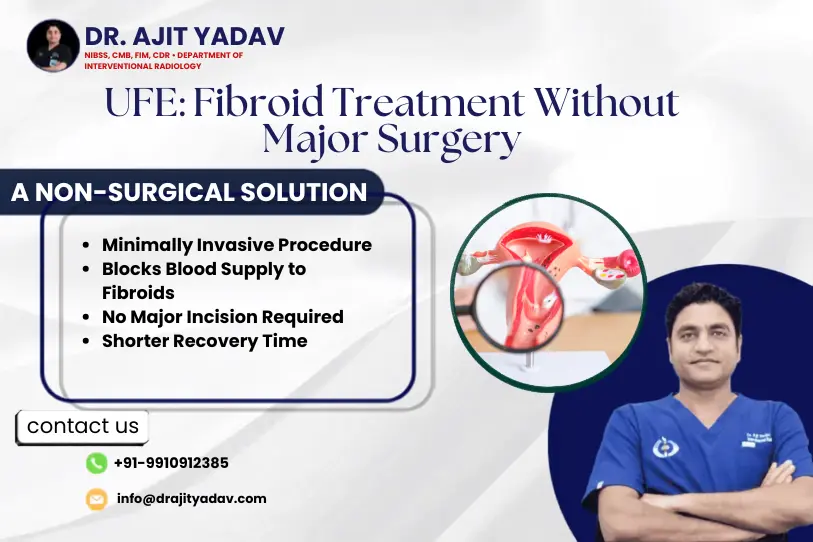
Uterine fibroids are common non-cancerous growths that develop in or around the uterus. While some fibroids cause no symptoms, others can lead to heavy menstrual bleeding, pelvic pressure, abdominal discomfort, frequent urination, or fertility-related concerns. When symptoms interfere with daily life, treatment may be recommended.
UFE Treatment Without Major Surgery offers a minimally invasive approach for selected patients who want to manage symptomatic fibroids without undergoing major abdominal surgery. Uterine Fibroid Embolization (UFE) is performed by an interventional radiologist using image guidance to reduce the blood supply to fibroids, allowing them to gradually shrink.
For women looking for alternatives to major surgery, understanding how UFE works, who may benefit, its advantages, recovery, and potential risks can help in making an informed treatment decision.
What Are Uterine Fibroids?
Uterine fibroids are benign growths that develop from the muscular tissue of the uterus. They can vary considerably in size, number, and location. Some women have a single fibroid, while others may develop multiple fibroids.
Common Types of Fibroids
Fibroids are generally classified according to where they develop:
- Intramural fibroids: Develop within the muscular wall of the uterus.
- Submucosal fibroids: Grow toward the inner cavity of the uterus and may cause heavy menstrual bleeding.
- Subserosal fibroids: Grow toward the outer surface of the uterus and may cause pressure on nearby organs.
- Pedunculated fibroids: Grow on a stalk-like structure attached to the uterus.
The symptoms and treatment approach can depend on the fibroid’s size, location, number, symptoms, age, and reproductive plans.
Symptoms of Uterine Fibroids
Some women may have no symptoms at all. When symptoms occur, they can include:
- Heavy or prolonged menstrual periods
- Pelvic pain or pressure
- Abdominal fullness or enlargement
- Pain during sexual intercourse
- Frequent urination
- Constipation or bowel pressure
- Lower back or pelvic discomfort
- Tiredness related to anemia from heavy bleeding
- Difficulty becoming pregnant in some cases
UFE Treatment Without Major Surgery may be considered when fibroids are causing significant symptoms and the patient is an appropriate candidate for embolization.
Causes and Risk Factors
The exact cause of fibroids is not completely understood. Hormonal factors, particularly estrogen and progesterone, appear to influence fibroid growth. Genetics and other biological factors may also contribute.
Fibroids are more frequently diagnosed during the reproductive years. Family history, age, hormonal factors, and certain metabolic factors may influence the likelihood of developing them.
Having fibroids does not automatically mean treatment is necessary. Small, asymptomatic fibroids may simply be monitored.
How Is UFE Performed?
UFE Treatment Without Major Surgery is an image-guided procedure designed to reduce the blood supply to uterine fibroids. Unlike an open surgical procedure, UFE does not require a large abdominal incision.
Diagnosis Before Treatment
A proper diagnosis is essential before deciding whether UFE is suitable. Your doctor may recommend:
- Medical and menstrual history
- Pelvic examination
- Ultrasound
- Pelvic MRI when detailed mapping of fibroids is required
- Blood tests, particularly when heavy menstrual bleeding may have caused anemia
Imaging helps determine the size, location, and number of fibroids and provides important information for treatment planning.
UFE Treatment Procedure
During UFE, an interventional radiologist typically:
- Uses local anesthesia to numb the access area.
- Place a small catheter into an artery, commonly through the wrist or groin.
- Uses X-ray imaging to guide the catheter toward the uterine arteries.
- Injects carefully selected embolic particles through the catheter.
- Reduces blood flow to the fibroids while preserving the overall blood supply of the uterus.
- Removes the catheter and closes the access site.
With reduced blood flow, the fibroids gradually shrink over time. The uterus remains in place.
Who May Be Considered for UFE?
UFE may be considered for women with symptomatic fibroids who want a minimally invasive alternative to major surgery. It can be particularly useful when multiple fibroids are present because several fibroids can be treated during the same procedure.
However, UFE is not suitable for everyone. Pregnancy, active pelvic infection, certain fibroid characteristics, suspected malignancy, and some other medical conditions may affect eligibility. A specialist assessment is necessary before treatment.
Benefits of UFE
Potential advantages of UFE Treatment Without Major Surgery include:
- No large abdominal incision
- Minimally invasive treatment
- Ability to treat multiple fibroids
- Preservation of the uterus
- Generally shorter recovery than major abdominal surgery
- Reduced fibroid-related bleeding and pressure symptoms in many patients
- No need to surgically remove each individual fibroid
The expected results vary between patients, and UFE should be recommended based on individual medical circumstances.
Recovery After UFE
Recovery after UFE is generally shorter than recovery following many major surgical procedures, although the experience differs from person to person.
Cramping and pelvic discomfort are common during the first few days. Some patients may also experience fatigue, nausea, or a mild fever. These symptoms are often part of post-embolization syndrome and can usually be managed with medications prescribed by the treating team.
Most patients gradually return to routine activities as they feel better. Your interventional radiologist will provide specific instructions regarding pain medication, physical activity, wound care, and follow-up.
Fibroids do not disappear immediately. They typically shrink progressively over the following months, and symptoms may improve gradually.
UFE vs Other Fibroid Treatments
UFE Treatment Without Major Surgery is one of several treatment options for uterine fibroids. The best approach depends on symptoms, fibroid characteristics, age, overall health, and pregnancy plans.
UFE vs Myomectomy
Myomectomy is a surgical procedure that removes fibroids while leaving the uterus in place. It may be appropriate for women who need direct removal of selected fibroids, particularly when fertility considerations are important.
UFE, on the other hand, works by reducing the blood supply to fibroids so they gradually shrink. It avoids major abdominal surgery in many cases.
The choice between UFE and myomectomy should be individualized after discussing potential benefits, risks, recurrence, and reproductive goals with the appropriate specialists.
UFE vs Hysterectomy
Hysterectomy removes the uterus and is a definitive treatment for fibroids. However, it is major surgery and permanently eliminates the possibility of carrying a pregnancy.
UFE preserves the uterus and is minimally invasive, making it an important alternative for appropriately selected patients who want to avoid hysterectomy.
Important Considerations
Although UFE Treatment Without Major Surgery can offer significant benefits, it is not risk-free. Possible complications include bleeding or bruising at the catheter site, infection, pain, allergic reaction to contrast material, blood-vessel complications, and ovarian function changes in some patients.
The effect of UFE on future fertility and pregnancy remains an important consideration. Women who wish to become pregnant should discuss fertility goals with their gynecologist and interventional radiologist before choosing a treatment.
FAQs About UFE Treatment
1. What is a UFE?
Uterine Fibroid Embolization is a minimally invasive procedure that reduces blood flow to uterine fibroids, causing them to gradually shrink.
2. Is UFE a major surgery?
No. UFE is a minimally invasive, image-guided procedure and does not involve the large abdominal incision associated with many major surgeries.
3. Does UFE remove fibroids?
UFE does not physically remove fibroids. Instead, it blocks their blood supply, causing them to shrink gradually.
4. Can multiple fibroids be treated with UFE?
Yes. One advantage of UFE is that multiple fibroids can often be treated during the same procedure.
5. How long does recovery after UFE take?
Recovery varies. Many patients can resume normal activities relatively quickly compared with major abdominal surgery, although pelvic cramping and fatigue may occur during the early recovery period.
6. Is UFE painful?
Cramping and pelvic pain are common after the procedure, particularly during the first few days. Medication is generally provided to control discomfort.
7. Can UFE preserve the uterus?
Yes. UFE is a uterus-preserving treatment because the uterus is not surgically removed.
8. Is UFE suitable for women planning pregnancy?
The decision requires individualized counseling. If future pregnancy is important, discuss UFE, myomectomy, and other options with your gynecologist and interventional radiologist before treatment.
9. When will fibroid symptoms improve after UFE?
Improvement varies. Heavy bleeding and pressure-related symptoms may improve over time as the treated fibroids shrink.
10. How do I know if UFE is right for me?
A specialist evaluation using your symptoms, medical history, ultrasound or MRI findings, fibroid characteristics, and reproductive plans is needed to determine whether UFE is appropriate.
Why Choose Dr. Ajit Yadav for UFE Treatment?
Dr. Ajit Yadav | Interventional Radiologist provides minimally invasive, image-guided interventional radiology treatments. His clinical services include procedures such as Uterine Fibroid Embolization (UFE), Prostatic Artery Embolization (PAE), peripheral angioplasty, and other vascular interventions.
For women considering an alternative to major fibroid surgery, consultation with an experienced interventional radiologist can help determine whether UFE is an appropriate option based on individual imaging and medical history.
UFE Treatment Without Major Surgery can be an effective minimally invasive option for selected women with symptomatic uterine fibroids. However, treatment decisions should always be individualized after proper diagnosis and specialist evaluation.
Book an Appointment with Dr. Ajit Yadav
If uterine fibroids are affecting your daily life through heavy bleeding, pelvic pressure, pain, or other symptoms, speak with Dr. Ajit Yadav, Interventional Radiologist, to discuss your treatment options.

Comments are closed