
Heavy menstrual bleeding, pelvic discomfort, and pressure are common problems among women with uterine fibroids. While some fibroids cause no symptoms, others can affect daily activities, work, sleep, and overall quality of life. Fortunately, treatment does not always mean major surgery.
Uterine Fibroid Embolization Treatment in Delhi is a minimally invasive treatment option that can help manage symptomatic fibroids while preserving the uterus. The procedure is performed by an interventional radiologist using image guidance to reduce the blood supply to fibroids, causing them to shrink gradually.
This treatment may be considered for women experiencing heavy periods, pelvic pressure, pain, or other fibroid-related symptoms. However, treatment decisions should always be based on an individual’s symptoms, fibroid size and location, medical history, and personal treatment goals.
Understanding Uterine Fibroids: Symptoms and Causes
Uterine fibroids are non-cancerous growths that develop from the muscular tissue of the uterus. They can occur as a single fibroid or as multiple growths. Their size can range from very small nodules to larger masses.
Not every woman with fibroids requires treatment. Some fibroids remain small and cause no noticeable symptoms. Others can grow or affect the shape of the uterus and lead to significant menstrual or pelvic symptoms.
Common Symptoms of Uterine Fibroids
Symptoms vary depending on the number, size, and location of the fibroids. Common symptoms include:
- Heavy or prolonged menstrual bleeding
- Passing large blood clots during periods
- Pelvic pressure or heaviness
- Lower abdominal discomfort
- Painful periods
- Lower back pain
- Frequent urination
- Constipation or bowel pressure
- Pain during sexual intercourse
- Fatigue caused by anaemia from prolonged blood loss
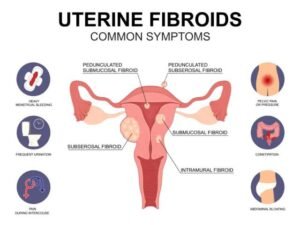
uterine fibroids
Heavy menstrual bleeding is one of the reasons women seek medical attention for fibroids. If blood loss is significant over time, it may contribute to iron-deficiency anemia.
What Causes Uterine Fibroids?
The exact cause of fibroids is not completely understood. Hormonal and genetic factors appear to influence their development. Fibroids are responsive to hormones such as oestrogen and progesterone and are most commonly found during the reproductive years.
A family history of fibroids may also increase the likelihood of developing them. However, having risk factors does not mean that a woman will necessarily develop symptomatic fibroids.
Uterine Fibroid Embolization Treatment in Delhi may be considered when fibroids are causing significant symptoms and a minimally invasive approach is clinically appropriate.
Diagnosis and Treatment Options
Before recommending any procedure, a specialist needs to understand the patient’s symptoms and evaluate the fibroids carefully. Diagnosis usually begins with a medical history and physical examination, followed by imaging when appropriate.
How Are Fibroids Diagnosed?
Ultrasound is commonly used as an initial imaging test. It can help identify the number, size, and general location of fibroids.
In some cases, an MRI may be recommended. MRI can provide more detailed information about the uterus and fibroids and can be particularly useful when planning an interventional procedure.
Blood tests may also be advised if the patient has heavy menstrual bleeding. These tests can help identify anemia or other conditions that may contribute to the symptoms.
Uterine Fibroid Embolization Procedure
Uterine Fibroid Embolization, commonly called UFE, is an image-guided procedure performed by an interventional radiologist.
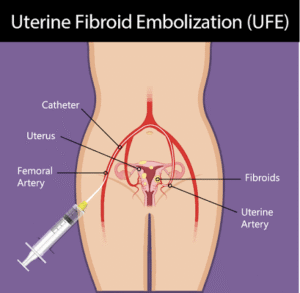
During the procedure, a thin catheter is introduced through a blood vessel, commonly through the wrist or groin depending on the individual case. Using imaging guidance, the catheter is carefully directed toward the arteries supplying the fibroids.
Small embolic particles are then delivered through the catheter. These particles reduce blood flow to the fibroid. With less blood supply, the fibroid gradually shrinks, which can help reduce symptoms.
The uterus remains in place, and the procedure does not involve surgically cutting out each fibroid.
Uterine Fibroid Embolization Treatment in Delhi may be suitable for selected women who want a minimally invasive treatment option. However, UFE is not automatically appropriate for every patient, so individual assessment is important.
Other Treatment Options
Fibroid treatment depends on symptoms and individual circumstances. Options may include:
- Observation for fibroids that are not causing significant symptoms
- Medicines to help control bleeding or other symptoms
- Uterine Fibroid Embolization
- Selected minimally invasive fibroid procedures
- Myomectomy to surgically remove fibroids
- Hysterectomy to remove the uterus in appropriate cases
The choice depends on factors such as age, symptoms, fibroid characteristics, medical history, and reproductive plans.
Benefits, Recovery and Treatment Comparison
One of the main reasons some women consider UFE is that it offers a Minimally Invasive Fibroid Treatment option without surgically removing the uterus.
Potential Benefits of UFE
For appropriately selected patients, UFE may offer several benefits:
- Minimally invasive approach
- No need for an abdominal incision like traditional open surgery
- Can treat multiple fibroids during the same procedure
- Uterus is preserved
- Can help reduce heavy menstrual bleeding
- Can help relieve pelvic pressure and other fibroid-related symptoms
- Recovery may be shorter than that associated with some major surgical procedures
The actual results vary from patient to patient. A doctor should explain the potential benefits and limitations after reviewing the patient’s medical information.
Recovery After UFE
Some cramping, pelvic discomfort, tiredness, nausea, or mild fever can occur after embolization. These symptoms are generally managed according to the treating specialist’s instructions.
The recovery period varies between individuals. Many patients can gradually return to routine activities after a relatively short period, but strenuous physical activity may need to be limited temporarily.
Follow-up is important because fibroids generally shrink gradually rather than disappearing immediately. Your doctor may recommend clinical follow-up and, when appropriate, repeat imaging to assess the response.
If you are searching online for uterine fibroid treatment near me in Delhi, it is useful to look beyond location alone. The experience of the treating specialist, the available treatment options, and whether the procedure is appropriate for your particular fibroid pattern are all important considerations.
UFE Compared With Surgery
| Treatment | General approach | Uterus preserved? | Recovery |
| Medication | Controls selected symptoms | Yes | Usually minimal |
| UFE | Reduces blood supply to fibroids | Yes | Generally shorter than major surgery |
| Myomectomy | Removes fibroids surgically | Usually | Depends on surgical approach |
| Hysterectomy | Removes the uterus | No | Surgical recovery required |
This comparison is only a general overview. The most suitable option depends on the individual patient.
About Dr. Ajit Yadav | Interventional Radiologist
Dr. Ajit Yadav is an Interventional Radiologist with expertise in image-guided minimally invasive procedures. His clinical work includes interventional treatments for conditions involving the uterus, thyroid, liver, and vascular system.

Depending on individual patient assessment, his services may include Uterine Fibroid Embolization (UFE), Uterine Artery Embolization, Prostate Artery Embolization, thyroid nodule ablation, and image-guided liver tumour procedures.
For women considering UFE, consultation with an experienced interventional radiologist can help determine whether embolization is appropriate based on the size, number, and location of the fibroids.
Uterine Fibroid Embolization Treatment in Delhi should always begin with an individualized evaluation rather than selecting a procedure based only on online information.
Frequently Asked Questions
1. What is Uterine Fibroid Embolization?
UFE is a minimally invasive procedure that reduces blood flow to uterine fibroids. Reduced blood supply causes the treated fibroids to shrink gradually and can help improve symptoms.
2. Can UFE help with heavy menstrual bleeding?
Yes. Reducing the blood supply to fibroids can help decrease fibroid-related heavy menstrual bleeding in appropriately selected patients.
3. Is UFE a surgical procedure?
UFE is an image-guided minimally invasive procedure rather than conventional open surgery. It is performed using a catheter inserted through a blood vessel.
4. Does UFE remove the fibroid?
UFE does not physically remove the fibroid. Instead, it reduces its blood supply, allowing the fibroid to shrink over time.
5. Is UFE suitable for every woman with fibroids?
No. Suitability depends on several factors, including fibroid size, number, location, symptoms, medical history, and individual treatment goals.
6. How long does recovery after UFE take?
Recovery varies from person to person. Your interventional radiologist will provide specific instructions regarding pain management, physical activity, and follow-up.
7. Can multiple fibroids be treated with UFE?
UFE can treat multiple fibroids during the same procedure because the treatment targets the blood supply to the fibroids rather than requiring each fibroid to be surgically removed individually.
8. Is UFE the same as a hysterectomy?
No. UFE treats fibroids by reducing their blood supply, while a hysterectomy involves surgical removal of the uterus.
9. What should I bring to a fibroid consultation?
Bring previous ultrasound or MRI reports, blood-test results if available, a list of current medicines, and information about your menstrual symptoms and previous treatments.
Conclusion
Uterine Fibroid Embolization Treatment in Delhi provides a minimally invasive approach for selected women experiencing symptoms from uterine fibroids. By reducing blood flow to the fibroids, UFE can help them shrink and may improve symptoms such as heavy menstrual bleeding and pelvic pressure.
At the same time, UFE is only one of several available treatment options. A detailed assessment is important to determine whether embolization, medication, surgery, or another Minimally Invasive Fibroid Treatment is appropriate.
If you are experiencing heavy periods, pelvic pressure, or other symptoms related to fibroids, consider discussing your options with an experienced specialist rather than delaying evaluation.
Book an appointment with Dr. Ajit Yadav | Interventional Radiologist to discuss your symptoms, imaging reports, and possible treatment options. A personalized consultation can help you understand whether Uterine Fibroid Embolization or another minimally invasive approach may be suitable for your condition.
Uterine Fibroid Embolization Treatment in Delhi is intended for educational purposes and should not replace personalized medical advice from a qualified healthcare professional.

Comments are closed