
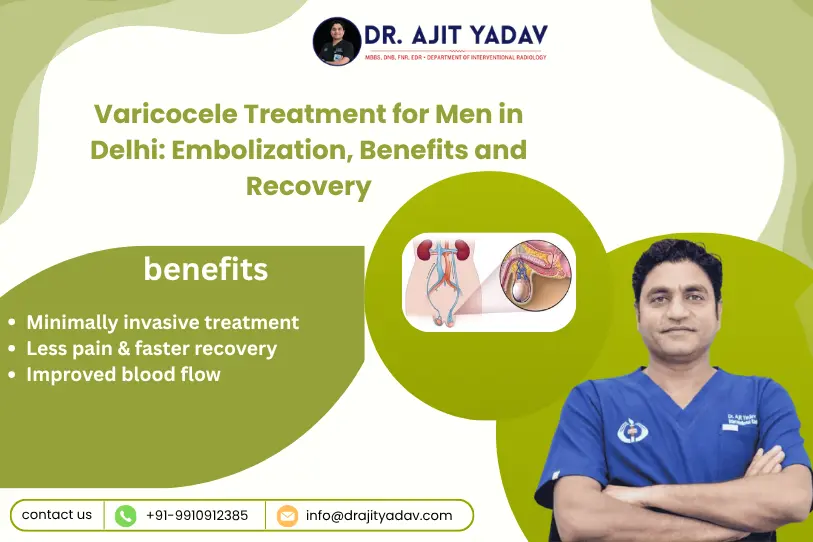
Varicocele is a condition in which veins inside the scrotum become enlarged due to abnormal blood flow. It commonly develops on the left side and may cause a feeling of heaviness, discomfort, or swelling. In some men, varicocele is associated with reduced sperm quality and fertility difficulties, although many affected men have no symptoms and can father children naturally.
For men exploring Varicocele Treatment for Men in Delhi: Embolization, Benefits and Recovery, understanding the available treatment options is an important first step. Depending on the severity of the condition, symptoms, fertility goals, and clinical findings, treatment may involve observation, supportive measures, surgical repair, or varicocele embolization.
Varicocele embolization is a minimally invasive, image-guided procedure that blocks the affected veins from within using a catheter. It may be suitable for selected patients who want an alternative to conventional surgery. However, not every varicocele requires treatment, and the best approach depends on an individual assessment.
Dr. Ajit Yadav provides a point of contact for men seeking information about varicocele care in Delhi. This guide explains the symptoms, causes, diagnosis, treatment choices, potential benefits, recovery considerations, and relationship between varicocele and male fertility.
Understanding Varicocele: Symptoms, Causes and When to Seek Treatment
What is a varicocele?
A varicocele is an enlargement of veins in the pampiniform plexus, a network of veins that helps regulate the temperature around the testicles. When the valves within these veins do not function effectively, blood can accumulate, causing the veins to enlarge.
The condition often develops during adolescence or early adulthood. Some men discover it during a routine examination, while others seek medical advice because of scrotal discomfort or fertility concerns.
When considering Varicocele Treatment for Men in Delhi: Embolization, Benefits and Recovery, patients should understand that treatment is not automatically necessary for every diagnosis. The decision depends on symptoms, examination findings, testicular development, and fertility considerations.
Common symptoms of varicocele
Many varicoceles cause no noticeable symptoms. When symptoms occur, they may include:
- Dull scrotal pain: An aching sensation that may worsen after prolonged standing or physical activity.
- Scrotal heaviness: A dragging or uncomfortable feeling, particularly towards the end of the day.
- Visible or enlarged veins: Enlarged veins may sometimes feel like a soft bundle above the testicle.
- Testicular size differences: In some patients, the affected testicle may be smaller than expected.
- Fertility difficulties: Some men experience abnormal semen parameters, although varicocele does not necessarily cause infertility.
Severe or sudden testicular pain requires urgent medical assessment because it may indicate a different condition, such as testicular torsion. A newly appearing varicocele, particularly on the right side or one that does not reduce when lying down, also warrants prompt evaluation.
What causes varicocele?
The exact cause is not always identifiable. Varicoceles are generally associated with ineffective venous valves and the resulting backward flow of blood.
Factors contributing to their development include:
- Differences in the anatomy of the testicular veins.
- Increased pressure within the venous drainage system.
- Inadequate functioning of valves that normally help blood flow towards the heart.
- The drainage pattern of the left testicular vein, which helps explain why left-sided varicoceles are more common.
Varicocele is not generally caused by sexual activity, masturbation, or a lack of exercise. It is also not automatically a sign of infertility.
When should men consider treatment?
Treatment may be considered when a varicocele causes persistent discomfort, is associated with reduced testicular growth in adolescents, or occurs alongside infertility and abnormal semen analysis in an appropriate clinical setting.
Men searching for Varicocele Treatment Without Surgery should first obtain an accurate diagnosis. Supportive measures may help manage mild discomfort, but they do not correct the abnormal venous blood flow. Embolization is one treatment option that can address the affected veins without conventional surgical incisions.
Diagnosis of Varicocele and Understanding Your Treatment Options
Accurate diagnosis helps determine whether a varicocele needs treatment and which procedure may be appropriate. An enlarged vein alone does not mean that intervention is necessary.
How is varicocele diagnosed?
A doctor usually evaluates the condition through a medical history, physical examination, and selected investigations.
- Physical examination: The scrotum is examined while standing and sometimes lying down. The doctor may ask the patient to strain briefly to assess the veins.
- Scrotal Doppler ultrasound: This imaging test can assess vein enlargement and blood flow, particularly when the examination is inconclusive or another condition needs to be excluded.
- Semen analysis: Men experiencing fertility difficulties may need semen testing to assess sperm concentration, movement, and morphology.
- Hormonal testing: Blood tests may be appropriate in selected cases when symptoms or fertility findings suggest a hormonal issue.
- Additional evaluation: The doctor may recommend further investigations depending on the symptoms and examination findings.
Not every patient needs every test. For men seeking Male Infertility Treatment in Delhi, assessment may also involve reviewing reproductive history, previous fertility investigations, and other possible causes of infertility.
What is varicocele embolization?
Varicocele embolization is a minimally invasive, image-guided procedure commonly performed by an interventional radiologist. Instead of surgically exposing and tying off the affected veins, the doctor accesses a vein through a small puncture, usually in the groin or neck, and guides a thin catheter towards the abnormal testicular veins.
The procedure generally involves these steps:
- Vascular access: A small needle puncture allows the catheter to enter a suitable vein.
- Image-guided navigation: Fluoroscopy and contrast imaging help the specialist identify the affected veins.
- Vein occlusion: Small coils, a sclerosant, or another appropriate embolic agent is used to block the abnormal venous pathway.
- Completion and monitoring: The catheter is removed, the access site is dressed, and the patient is observed before discharge.
The procedure is performed using local anaesthesia, sometimes with additional sedation depending on the case and clinical practice. Many patients return home the same day, although the discharge plan depends on their condition and the facility’s protocol.
Benefits and limitations of embolization
For appropriately selected patients, potential benefits include:
- Avoiding the larger incision associated with conventional surgical repair.
- Usually requiring only a small puncture for catheter access.
- Often allowing a relatively short recovery period.
- Providing an image-guided treatment option for suitable varicoceles.
- Offering an alternative when a varicocele persists or recurs after previous treatment.
Embolization also has limitations. The procedure may not be technically successful if the affected veins cannot be accessed or treated adequately. Varicocele can recur or persist, and complications may include bruising, contrast reactions, vein inflammation, or, rarely, coil migration or other vascular problems.
Treatment may improve semen parameters in some men, but it does not guarantee pregnancy or resolve every cause of infertility. These potential benefits and risks should be discussed with the treating specialist.
Embolization versus surgery
When considering Varicocele Treatment for Men in Delhi: Embolization, Benefits and Recovery, patients should compare the options based on their individual circumstances rather than assuming one method is best for everyone.
| Factor | Varicocele embolization | Surgical repair |
| Approach | Catheter inserted through a small vein puncture | Small incision to access and treat affected veins |
| Anaesthesia | Usually local, sometimes with sedation | Depends on the surgical technique; often general or regional |
| Recovery | Often a few days for routine activities | Often several days to a couple of weeks, depending on technique and recovery |
| Main considerations | Radiation exposure, contrast use, and technical access | Surgical wound, anaesthesia, and procedure-specific risks |
| Potential recurrence | Possible | Possible |
| Fertility outcomes | May improve in selected patients | May improve in selected patients |
Outcomes depend on the patient’s condition, the technique used, and the treating specialist’s experience. Neither treatment can guarantee fertility improvement, and the available evidence does not establish that embolization is always superior to surgery.
Recovery after varicocele embolization
Recovery is often straightforward, but individual experiences vary.
- First 24–48 hours: Rest as advised and keep the access site clean and dry according to the discharge instructions.
- First few days: Mild soreness, bruising, or tenderness may occur. Use medication only as recommended by the treating team.
- Return to routine activities: Many patients resume light daily activities within a short period. Heavy lifting, strenuous exercise, and sexual activity may need to be restricted temporarily.
- Follow-up: Attend the recommended review to assess symptoms and discuss any further testing.
Seek urgent medical attention for severe or worsening pain, significant swelling, fever, chest pain, breathing difficulties, or bleeding that does not stop.
For men undergoing Varicocele Treatment for Men in Delhi: Embolization, Benefits and Recovery, follow-up is particularly important when fertility is a treatment goal. Semen parameters may take several months to show changes, and repeat semen analysis may be recommended at an appropriate interval.
Choosing the Right Specialist for Varicocele Treatment in Delhi
Selecting the right specialist is an important part of managing varicocele, especially when discomfort or fertility concerns are involved. The doctor should explain the diagnosis, discuss suitable treatment methods, and clarify what the procedure can realistically achieve.
What should you look for in a specialist?
Consider the following factors before choosing a doctor:
- Relevant qualifications: Verify the specialist’s medical qualifications, registration, and training in the procedure being considered.
- Procedural experience: If you are considering embolization, ask about the doctor’s experience with image-guided vascular procedures and management of recurrent varicoceles.
- Individualised assessment: A suitable specialist evaluates symptoms, examination findings, ultrasound results, and fertility goals before recommending treatment.
- Clear communication: The doctor should explain the potential benefits, limitations, risks, alternatives, and expected recovery.
- Follow-up arrangements: Ask how treatment success will be assessed and when repeat examination or semen analysis may be needed.
Patients searching for Varicocele Treatment for Men in Delhi: Embolization, Benefits and Recovery should avoid choosing a procedure solely because it is described as minimally invasive. The best option depends on the individual diagnosis and the balance of expected benefits and risks.
Varicocele and male fertility
Varicocele is associated with impaired semen quality in some men, but many men with the condition have normal fertility. The relationship between varicocele and infertility depends on several factors, including semen parameters, testicular function, age, and the fertility health of both partners.
Treatment may be considered for selected men who have a clinically detectable varicocele, infertility, and abnormal semen parameters. Decisions should follow a proper fertility evaluation rather than relying on ultrasound findings alone.
For men seeking Male Infertility Treatment in Delhi, a specialist may recommend semen analysis and other investigations before discussing whether varicocele treatment is likely to help. Improvements in semen parameters, when they occur, are not the same as a guaranteed pregnancy.
What influences the cost of varicocele treatment?
The cost of Varicocele Treatment for Men in Delhi: Embolization, Benefits and Recovery varies according to the individual treatment plan. There is no single price that applies to every patient.
Factors that may influence the total cost include:
- Consultation and diagnostic investigations.
- The complexity and location of the affected veins.
- The type of embolic materials and imaging required.
- Hospital or facility charges, anaesthesia or sedation, and observation requirements.
- Follow-up consultations and any additional fertility testing.
Request an itemised estimate after the specialist reviews your reports. Ask whether the estimate includes the procedure, consumables, facility charges, medicines, and follow-up visits. Treatment should be recommended according to medical need, not based on a fixed package or an assumed cost.
Frequently Asked Questions About Varicocele Treatment for Men in Delhi
1. Can varicocele be treated without surgery?
Yes. Varicocele embolization is a minimally invasive, image-guided procedure that blocks the affected veins without conventional surgical incisions. It is suitable for many, but not all, patients. Mild cases may require only observation and symptom management.
2. Is varicocele embolization painful?
The procedure is generally performed with local anaesthesia, sometimes with sedation. Patients may experience pressure during the procedure and temporary soreness or bruising afterwards. Pain levels and recovery vary between individuals.
3. How long does recovery from varicocele embolization take?
Many patients return to light daily activities within a few days. Strenuous exercise and heavy lifting may need to be avoided temporarily. Your treating specialist will provide personalised instructions based on the procedure and your recovery.
4. Does varicocele always cause male infertility?
No. Many men with varicocele have normal fertility. In some patients, the condition is associated with abnormal semen parameters. Fertility assessment helps determine whether the varicocele may be contributing to reproductive difficulties.
5. Can varicocele embolization improve sperm quality?
Semen parameters may improve in some appropriately selected patients after treatment. The extent of improvement varies, and the procedure cannot guarantee conception. Follow-up semen analysis may help assess the response.
6. Is embolization better than varicocele surgery?
Neither option is universally better. Embolization avoids conventional surgical incisions, while surgical repair may be preferred in certain clinical situations. The decision depends on anatomy, previous treatment, patient preferences, available expertise, and individual medical findings.
7. Can varicocele return after embolization?
Yes. Persistent or recurrent varicocele is possible after embolization, just as recurrence can occur after surgery. Follow-up helps identify ongoing symptoms or the need for further assessment.
8. When should I seek medical advice for varicocele?
Arrange an assessment if you experience persistent scrotal discomfort, visible enlarged veins, testicular size differences, or fertility difficulties. Sudden or severe testicular pain requires urgent medical evaluation.
9. Where can I enquire about varicocele treatment in Delhi?
You can contact Dr. Ajit Yadav’s clinic using the details provided below to enquire about consultation arrangements and whether your condition may be suitable for embolization.
Conclusion
Varicocele treatment should be based on an accurate diagnosis, symptom severity, fertility goals, and an informed discussion of available options. Observation may be appropriate for men without significant symptoms or fertility concerns, while selected patients may benefit from embolization or surgical repair.
If you are considering Varicocele Treatment for Men in Delhi: Embolization, Benefits and Recovery, consult a suitably qualified specialist to understand the likely benefits, limitations, recovery requirements, and follow-up plan for your particular condition.
Book an Appointment with Dr. Ajit Yadav
Dr. Ajit Yadav
Consultation for varicocele evaluation and treatment enquiries
Location
Sir Ganga Ram Hospital, Old Rajinder Nagar, Rajinder Nagar, Delhi – 110060
Phone
+91 96434 62949
info@drajityadav.com

Comments are closed