
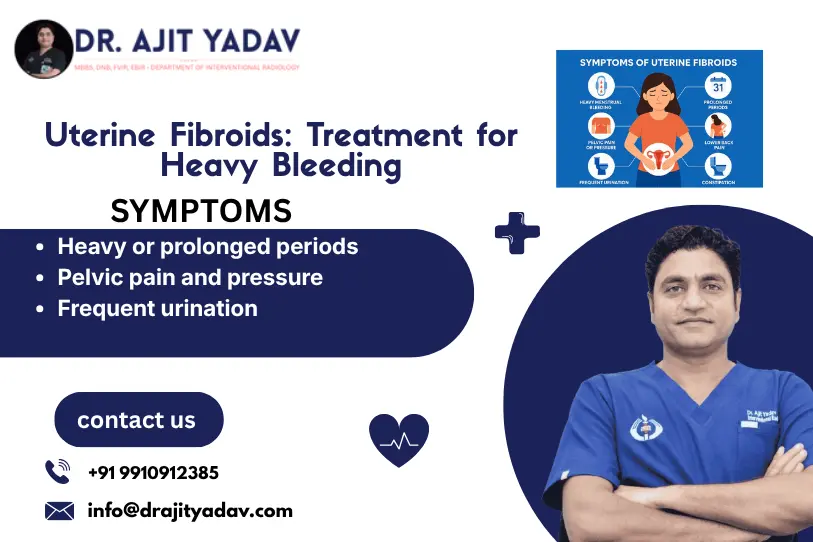
Heavy menstrual bleeding can affect daily activities, energy levels, and overall quality of life. One possible cause is uterine fibroids, which are non-cancerous growths that develop in or around the uterus. Although some fibroids do not cause symptoms, others can lead to prolonged periods, pelvic discomfort, and iron-deficiency anemia.
Uterine Fibroid Treatment for Heavy Bleeding: Embolization and Treatment Options explains the available treatments, including medication, uterine fibroid embolization, and surgery. The most appropriate approach depends on the size and location of the fibroids, the severity of symptoms, the patient’s medical history, and future pregnancy plans.
For women exploring Uterine Fibroid Treatment Without Surgery, uterine fibroid embolization (UFE) may be an option worth discussing with a qualified specialist.
What Are Uterine Fibroids and What Causes Heavy Bleeding?
Uterine fibroids, also known as leiomyomas, are non-cancerous growths that develop from the muscular tissue of the uterus. They can vary in size, from very small nodules to larger growths, and may occur as a single fibroid or multiple fibroids.
The relationship between fibroids and heavy menstrual bleeding depends partly on their location. Fibroids that grow close to or distort the uterine cavity are particularly associated with heavier or prolonged periods.
Common Symptoms of Uterine Fibroids
Symptoms can vary considerably. Some women have no noticeable symptoms, while others experience:
- Heavy menstrual bleeding or periods lasting longer than usual.
- Menstrual cramps and pelvic pain.
- A feeling of pressure or fullness in the lower abdomen.
- Frequent urination due to pressure on the bladder.
- Lower back discomfort.
- Tiredness, weakness, or breathlessness associated with anemia caused by blood loss.
- Difficulty conceiving in some cases, depending on the fibroid’s location and other fertility factors.
Heavy bleeding should not automatically be attributed to fibroids. Other conditions, including hormonal disorders, adenomyosis, and abnormalities of the uterine lining, can produce similar symptoms.
Causes and Risk Factors
The exact cause of uterine fibroids is not fully understood. Their development is associated with hormonal influences, particularly oestrogen and progesterone, as well as genetic factors.
Factors associated with an increased likelihood of developing fibroids include:
- Family history of uterine fibroids.
- Reproductive age, particularly before menopause.
- Certain hormonal and metabolic factors.
Having one or more risk factors does not mean that a person will necessarily develop fibroids. A medical assessment is needed to establish the likely cause of heavy bleeding.
How Are Uterine Fibroids Diagnosed?
Diagnosis usually begins with a discussion of menstrual patterns, bleeding severity, pain, medical history, and reproductive plans.
A doctor may recommend:
- Pelvic ultrasound: Helps identify fibroids and assess their size, number, and location.
- MRI: May provide more detailed information when treatment planning requires it.
- Blood tests: A complete blood count and other appropriate tests can help assess anemia and investigate other causes of bleeding.
- Additional uterine assessment: Depending on symptoms and clinical findings, hysteroscopy or endometrial sampling may be recommended.
Accurate diagnosis is essential because the most suitable treatment depends on the cause of bleeding, not simply the presence of a fibroid.
What Are the Treatment Options for Heavy Bleeding Due to Fibroids?
The main treatment options include medication, minimally invasive procedures, and surgery. The choice depends on symptom severity, fibroid characteristics, overall health, and whether the patient wants to become pregnant in the future.
1. Medication for Heavy Menstrual Bleeding
Medication may help control bleeding and manage related symptoms. Depending on the patient’s circumstances, options may include tranexamic acid, anti-inflammatory medicines, hormonal contraception, or a levonorgestrel-releasing intrauterine system. Certain hormone-modulating medicines may also be considered.
These treatments do not all shrink fibroids, and their suitability varies. A doctor should assess contraindications, other medical conditions, and the likely cause of bleeding before recommending medication.
2. Uterine Fibroid Embolization (UFE)
Uterine fibroid embolization, also called uterine artery embolization (UAE), is a minimally invasive procedure performed by an appropriately trained interventional radiologist.
It works by reducing the blood supply to the fibroids, causing them to shrink over time and helping relieve symptoms.
The procedure generally involves the following steps:
- Pre-procedure assessment: The specialist reviews imaging, medical history, symptoms, blood tests, and reproductive goals.
- Catheter placement: Using image guidance, a thin catheter is introduced through an artery, usually at the wrist or groin.
- Embolization: Small particles are delivered into the arteries supplying the fibroids to reduce their blood flow.
- Monitoring: The patient is observed after the procedure and receives instructions for pain control and recovery.
- Follow-up: Clinical reviews and, when appropriate, imaging help assess symptom improvement and fibroid response.
UFE is not suitable for every patient. The specialist must evaluate the fibroid pattern, possible alternative diagnoses, infection risk, and individual treatment goals.
3. Surgical Treatment
Surgery may be appropriate when fibroids are particularly large, symptoms are severe, other treatments have not worked, or the patient’s clinical circumstances favour an operation.
Two common procedures are:
- Myomectomy: Removes fibroids while preserving the uterus. Fibroids can recur, and future pregnancy considerations should be discussed with the surgeon.
- Hysterectomy: Removes the uterus and permanently ends the ability to carry a pregnancy. It may be appropriate for selected patients who do not wish to retain their uterus.
Hysteroscopic treatment may also be considered for certain fibroids projecting into the uterine cavity.
4. Uterine Fibroid Treatment Without Surgery
For patients seeking Uterine Fibroid Treatment Without Surgery, UFE is an important option to discuss with an interventional radiologist.
Unlike surgery, embolization does not require the fibroids to be surgically removed. Instead, it reduces their blood supply, allowing them to shrink over time. Many appropriately selected patients experience reduced menstrual bleeding and improvement in pressure-related symptoms.
However, non-surgical treatment is not necessarily the best choice for everyone. The decision should account for fibroid size and location, symptom severity, other health conditions, and plans for future pregnancy.
What Are the Benefits, Risks, Recovery Expectations, and Differences Between Treatments?
Understanding the benefits and limitations of each treatment can help patients make an informed decision with their healthcare team.
Benefits of Uterine Fibroid Embolization
Potential benefits of UFE include:
- No large surgical incision.
- Reduced menstrual bleeding in many appropriately selected patients.
- Improvement in pelvic pressure and other fibroid-related symptoms.
- Preservation of the uterus.
- Generally shorter initial recovery than major open surgery.
Results vary, and some patients may need further treatment. Preserving the uterus does not automatically mean that fertility outcomes will be the same as after myomectomy.
Possible Risks and Complications
UFE is generally considered an established treatment for appropriately selected patients, but it has potential risks. These include post-procedure pain, cramping, nausea, fever, infection, and vaginal discharge. Less common complications can include injury to surrounding tissues, premature ovarian insufficiency, or the need for additional treatment.
Anyone with fever, worsening pain, heavy bleeding, or other concerning symptoms after a procedure should contact their treating team promptly.
Recovery After Uterine Fibroid Embolization
Many patients return home the same day or after an overnight stay, depending on their condition and the hospital’s protocol.
Recovery may involve:
- Cramping and pelvic discomfort during the first few days.
- Tiredness and temporary flu-like symptoms.
- Gradual return to routine activities over several days to around one or two weeks, depending on recovery.
- Follow-up appointments to monitor symptoms and treatment response.
The timeline varies from person to person. The treating specialist will advise when to resume exercise, work, sexual activity, and other normal activities.
UFE vs Medication vs Surgery
| Feature | Medication | UFE | Surgery |
| Main purpose | Control bleeding and symptoms | Reduce fibroid blood supply and shrink fibroids | Remove fibroids or the uterus |
| Invasiveness | Non-invasive | Minimally invasive | Operative procedure |
| Uterus preserved | Yes | Yes | Depends on procedure |
| Recovery | Depends on medication and response | Often shorter than major surgery | Depends on procedure |
| Future pregnancy | Depends on medicine and condition | Requires careful individual assessment | Depends on the procedure and uterine healing |
| Best suited for | Selected patients needing symptom control | Selected patients seeking a uterus-preserving procedure | Patients whose clinical needs favour surgery |
There is no single best treatment for every patient. A specialist can explain the likely benefits, limitations, and risks based on the individual diagnosis.
Frequently Asked Questions
1. Can uterine fibroids cause heavy menstrual bleeding?
Yes. Fibroids, especially those that distort the uterine cavity, can cause heavy or prolonged periods. Other causes of abnormal bleeding should also be considered.
2. What is the best treatment for heavy bleeding caused by fibroids?
The best option depends on the cause and severity of bleeding, fibroid size and location, overall health, and pregnancy plans. Treatment may involve medication, UFE, or surgery.
3. Can uterine fibroids be treated without surgery?
Yes. Selected patients may benefit from medication or uterine fibroid embolization. Suitability depends on the clinical findings and treatment goals.
4. How does uterine fibroid embolization reduce bleeding?
UFE reduces blood flow to the fibroids through catheter-guided delivery of embolic particles. The fibroids shrink over time, which can reduce bleeding and other symptoms.
5. Is uterine fibroid embolization painful?
Patients may experience cramping and pelvic pain after the procedure. The medical team provides pain management and monitoring to help control these symptoms.
6. How long does recovery from UFE take?
Many patients resume light daily activities within several days and return to normal routines over approximately one to two weeks. Recovery varies according to individual health and the procedure.
7. Can I become pregnant after uterine fibroid embolization?
Pregnancy may be possible after UFE, but its effects on fertility and pregnancy outcomes require individual discussion. Patients who wish to become pregnant should consult a specialist about UFE versus myomectomy before deciding.
8. Does every uterine fibroid require treatment?
No. Fibroids without significant symptoms may only need monitoring. Treatment is considered according to symptoms, growth, location, complications, and the patient’s preferences.
9. When should I seek medical help for heavy menstrual bleeding?
Seek medical assessment if bleeding is persistent, periods are unusually heavy, or you experience fatigue or weakness. If you are soaking through pads rapidly and feel faint, have chest pain, shortness of breath at rest, or severe uncontrolled bleeding, seek urgent medical care.
10. How much does uterine fibroid treatment cost in Delhi?
The cost varies with the selected procedure, hospital charges, investigations, length of stay, and individual clinical needs. An accurate estimate should be obtained from the treating hospital after assessment.
Conclusion
Heavy menstrual bleeding caused by uterine fibroids can affect physical health, comfort, and everyday life. An accurate diagnosis helps determine whether medication, uterine fibroid embolization, or surgery is most appropriate.
Uterine Fibroid Treatment for Heavy Bleeding: Embolization and Treatment Options highlights why treatment decisions should be based on the patient’s symptoms, fibroid characteristics, and reproductive goals. For suitable patients, UFE offers a minimally invasive alternative that can reduce bleeding while preserving the uterus, although individual outcomes and risks vary.
Book an Appointment with Dr. Ajit Yadav in Delhi
If you are experiencing heavy menstrual bleeding or have been diagnosed with uterine fibroids, consult a specialist to understand your treatment options. Dr. Ajit Yadav can assess whether interventional radiology procedures, including uterine fibroid embolization, may be appropriate for your condition.
- Doctor: Dr. Ajit Yadav
- Location: Sir Ganga Ram Hospital, Old Rajinder Nagar, Rajinder Nagar, Delhi – 110060
- Phone: 096434 62949
- Email: info@drajityadav.com

Comments are closed